Fitness for beginners is about creating simple and sustainable habits that improve strength, endurance, flexibility, mobility, and overall well-being.
Starting a fitness journey does not mean spending hours in the gym or following an advanced workout program. Beginners can start with simple activities such as walking, stretching, bodyweight exercises, yoga, cycling, or light resistance training.
The goal is to become consistent and gradually improve your fitness level. With the right combination of exercise, nutrition, sleep, and recovery, fitness can become an important part of your everyday lifestyle.
Benefits of Fitness for Beginners
Starting a regular fitness routine can provide several physical and mental benefits.
Strength Training for Fitness Beginners
Strength exercises such as squats, push-ups, lunges, dumbbell exercises, and resistance-band workouts can help develop stronger muscles.
Building strength can also make everyday activities such as climbing stairs, carrying groceries, and lifting objects easier.
Cardio Exercises for Fitness Beginners
Cardiovascular activities such as brisk walking, cycling, swimming, jogging, and skipping can improve cardiovascular fitness.
For general physical-activity recommendations, beginners can also refer to the World Health Organization’s physical activity guidelines.
Weight Management and Beginner Fitness
Regular physical activity increases energy expenditure and, when combined with appropriate nutrition, can support healthy weight management.
Instead of focusing only on body weight, beginners can track improvements in strength, endurance, energy, mobility, and workout performance.
Flexibility Exercises for Fitness Beginners
Stretching, yoga, mobility exercises, and controlled bodyweight movements can help improve flexibility and range of motion.
Better mobility can make everyday movement more comfortable and can help beginners perform exercises with better technique.
Mental Well-Being and Beginner Fitness
Fitness is not only about physical appearance. Regular physical activity can support mood, reduce everyday stress, and contribute to overall mental well-being.
Exercise can also provide an opportunity to take a break from work, screens, and other daily responsibilities.
Suggested image ALT text:
Fitness for beginners improving flexibility with yoga
How to Start Fitness for Beginners
Starting a fitness routine can feel challenging when you are new to exercise. The best approach is to begin gradually.
Start with activities that you enjoy. You could walk for 20–30 minutes, perform basic bodyweight exercises, practice yoga, or use light resistance equipment.
Set realistic goals instead of expecting dramatic results within a few days. Your first goal could be exercising three times per week, walking regularly, improving your strength, or becoming more flexible.
As your fitness level improves, gradually increase your workout duration, repetitions, resistance, or intensity.
For additional general physical-activity guidance, you can also refer to the CDC’s physical activity recommendations.
Beginner Fitness Weekly Workout Plan
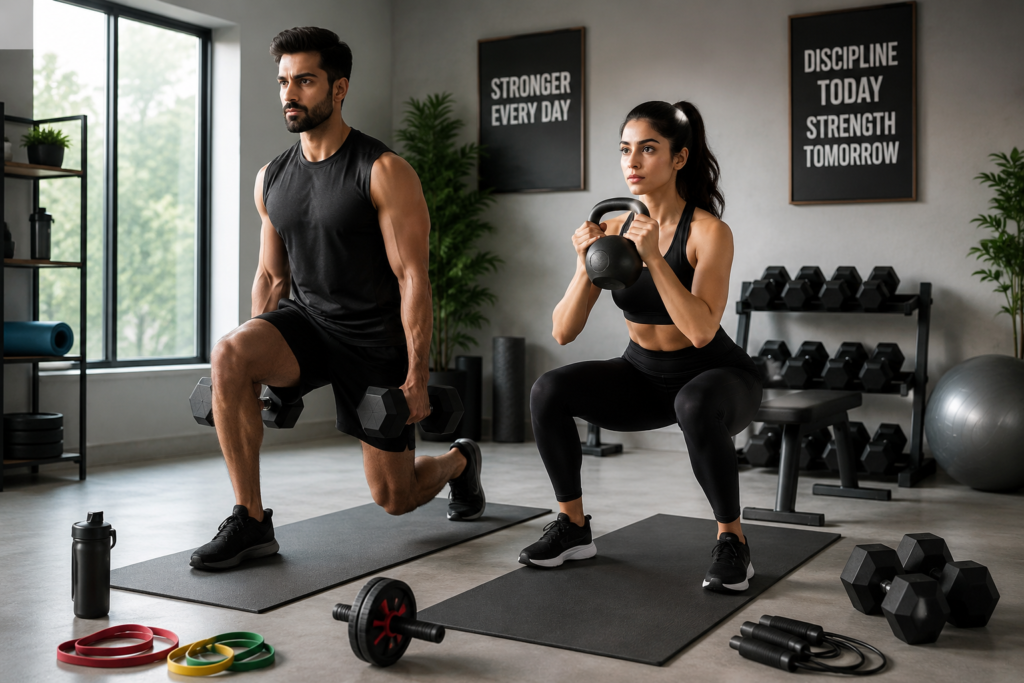
A simple weekly workout plan makes fitness for beginners easier to follow. You do not need complicated exercises or expensive equipment.
| Day | Workout | Duration |
|---|---|---|
| Monday | Full-body strength | 25–30 minutes |
| Tuesday | Brisk walking or cardio | 25–30 minutes |
| Wednesday | Rest and stretching | 10–15 minutes |
| Thursday | Full-body strength | 25–30 minutes |
| Friday | Walking or light cardio | 20–30 minutes |
| Saturday | Mobility and core | 20–25 minutes |
| Sunday | Rest | — |
Monday: Beginner Strength Training
Begin with approximately five minutes of easy warm-up movements.
Perform:
- Bodyweight squats — 2 sets of 8–12 repetitions
- Wall or knee push-ups — 2 sets of 6–10 repetitions
- Glute bridges — 2 sets of 10–12 repetitions
- Standing calf raises — 2 sets of 10–15 repetitions
- Bird-dogs — 2 sets of 6–10 repetitions per side
Rest for approximately 60–90 seconds between sets.
Suggested image ALT text:
Fitness for beginners doing strength training exercises
Tuesday: Beginner Cardio Workout
Take a 25–30-minute brisk walk. You should move faster than a casual stroll while still being able to speak comfortably.
You can also choose cycling, swimming, dancing, or another low-impact cardiovascular activity.
Wednesday: Recovery for Fitness Beginners
Use Wednesday as a recovery day. Take an easy walk and spend 10–15 minutes performing gentle stretches for your legs, hips, shoulders, and back.
Recovery is an important part of a sustainable fitness routine.
Thursday: Beginner Strength Training
Try another simple full-body workout:
- Chair squats — 2 sets of 8–12 repetitions
- Wall push-ups — 2 sets of 8–12 repetitions
- Supported reverse lunges — 2 sets of 6–8 repetitions per leg
- Glute bridges — 2 sets of 10–12 repetitions
- Dead bugs — 2 sets of 6–10 repetitions per side
Focus on controlled movements instead of exercising as quickly as possible.
Friday: Cardio for Fitness Beginners
Perform 20–30 minutes of light-to-moderate cardio.
A brisk walk is an excellent option, but you can also try cycling, swimming, dancing, or an elliptical machine.
Choose an activity you enjoy because consistency is one of the most important parts of long-term fitness.
Saturday: Mobility and Core for Beginners
Spend approximately 20–25 minutes working on mobility and core strength.
Try:
- Cat-cow stretches
- Shoulder rolls
- Hip circles
- Glute bridges
- Bird-dogs
- Dead bugs
- Gentle hamstring stretches
- Hip stretches
Move slowly and avoid forcing your body into uncomfortable positions.
Sunday: Rest Day for Fitness Beginners
Use Sunday as a complete rest day or perform gentle everyday movement if you feel comfortable.
Rest gives your body time to recover and prepares you for the following week’s workouts.
Essential Fitness Equipment for Beginners
You do not need an expensive gym membership to begin working out. A few basic pieces of home fitness equipment can make your workouts more convenient.
Dumbbells for Fitness Beginners
Dumbbells are versatile and can be used for exercises targeting the arms, shoulders, chest, back, and legs.
Adjustable dumbbells can be particularly useful because they allow you to change resistance without purchasing many individual weights.
Suggested image ALT text:
Dumbbells for fitness for beginners home workout
Resistance Bands for Fitness Beginners
Resistance bands are lightweight, portable, and useful for strength training, mobility exercises, warm-ups, and beginner workouts.
They are also convenient for people who want to exercise at home or while travelling.
Suggested image ALT text:
Resistance bands for fitness for beginners
Kettlebell Workouts for Beginners
Kettlebells can be used for exercises such as goblet squats, rows, presses, and other strength movements.
Beginners should start with an appropriate weight and focus on learning proper technique before increasing resistance.
Suggested image ALT text:
Kettlebell workout for fitness for beginners
Yoga Mats for Beginner Fitness
An exercise mat provides a comfortable surface for stretching, yoga, core exercises, and bodyweight workouts.
A quality mat can also provide additional grip during floor-based exercises.
Suggested image ALT text:
Yoga mat for fitness for beginners home workout
Skipping Rope for Fitness Beginners
Skipping ropes can provide an effective cardiovascular workout in a relatively small space.
Beginners should start with short intervals and gradually increase their skipping time as their coordination and fitness improve.
Suggested image ALT text:
Skipping rope workout for fitness for beginners
For more products, visit our Fitness Products page and explore our Home Gym Equipment collection.
Nutrition Tips for Fitness Beginners
Exercise is only one part of a healthy lifestyle. Nutrition provides the energy and nutrients your body needs to function and recover.
A balanced diet can include:
- Protein-rich foods
- Whole grains
- Fruits
- Vegetables
- Healthy fats
- Adequate fluids
Protein plays an important role in maintaining and repairing muscles, while carbohydrates provide energy for many forms of physical activity.
Instead of relying on highly restrictive diets, focus on creating sustainable eating habits that fit your lifestyle.
Suggested image ALT text:
Healthy nutrition for fitness for beginners
If you have specific dietary requirements or health concerns, speak with a qualified healthcare or nutrition professional for personalized advice.
Rest and Recovery for Fitness Beginners
Recovery is an important part of fitness for beginners. You do not need to exercise intensely every day to make progress.
During recovery, your body has an opportunity to adapt to physical activity. Adequate sleep, hydration, nutritious food, and rest days can support your overall training routine.
If your muscles feel particularly tired after a workout, give your body enough time to recover before performing another intense session.
Suggested image ALT text:
Rest and recovery for fitness for beginners
Common Fitness Mistakes for Beginners
Beginners often make mistakes that can make their fitness journey unnecessarily difficult.
Exercising Too Much Too Soon
One of the most common mistakes is trying to complete advanced workouts immediately. Start with manageable exercises and gradually increase the challenge.
Ignoring Exercise Technique
Proper technique is important, especially when using weights. Learn the correct movement pattern before increasing resistance.
Focusing Only on Weight Loss
Fitness involves much more than body weight. Strength, cardiovascular endurance, flexibility, mobility, energy, and healthy habits are also important measures of progress.
Skipping Recovery
Training without enough recovery can leave you feeling excessively tired and may make it harder to maintain a consistent routine.
Comparing Your Fitness Progress
Everyone starts from a different fitness level. Focus on your own progress rather than comparing your results with someone else’s.
Building a Sustainable Fitness Routine for Beginners
The best fitness routine is one you can maintain over time.
For beginners, a practical routine could include three strength or movement sessions, two cardio sessions, regular mobility work, and appropriate recovery days.
You can also keep your workouts short when necessary. A consistent 20–30-minute workout can be easier to maintain than an occasional two-hour workout.
Track your progress by recording your workouts, repetitions, walking time, strength improvements, flexibility, or energy levels.
For additional home-workout products, visit our Fitness Products page and explore our Home Gym Equipmentcollection.
Safety Tips for Fitness Beginners
Start each workout with an appropriate warm-up and avoid immediately performing high-intensity exercises.
Use controlled movements and choose exercise variations that match your current fitness level.
If you experience sharp pain, dizziness, unusual shortness of breath, chest pain, or another concerning symptom during exercise, stop exercising and seek appropriate medical advice.
People with existing health conditions or specific exercise concerns should speak with a qualified healthcare professional before starting a new exercise program.
Frequently Asked Questions About Fitness for Beginners
How Many Days a Week Should Beginners Exercise?
Beginners can start with several days of moderate physical activity each week while allowing appropriate recovery between more demanding sessions. Consistency is more important than trying to exercise intensely every day.
Can Beginners Exercise at Home?
Yes. Walking, bodyweight exercises, resistance bands, dumbbells, yoga, and other simple activities can create an effective home workout routine.
What Equipment Should Beginners Buy First?
Basic equipment such as an exercise mat, resistance bands, and suitable dumbbells can provide many workout options. Additional equipment can be added as your fitness experience grows.
How Long Should a Beginner Workout?
A 20–30-minute workout can be a practical starting point. Beginners can gradually increase workout duration as their fitness and endurance improve.
How Quickly Can Beginners See Fitness Results?
Progress varies from person to person. Focus on consistent habits, improved exercise performance, strength, endurance, and overall well-being rather than expecting immediate physical changes.
Conclusion: Make Fitness a Lifestyle
Fitness for beginners is about creating sustainable habits that support a stronger, healthier, and more active lifestyle.
You do not need to start with advanced exercises or expensive equipment. Begin with simple workouts, regular walking, mobility exercises, balanced nutrition, and adequate recovery.
Whether you exercise at a gym or create a home workout space with dumbbells, resistance bands, kettlebells, yoga mats, and skipping ropes, consistency is the key.
Start where you are, set realistic goals, learn proper exercise techniques, and gradually challenge yourself as your fitness improves.